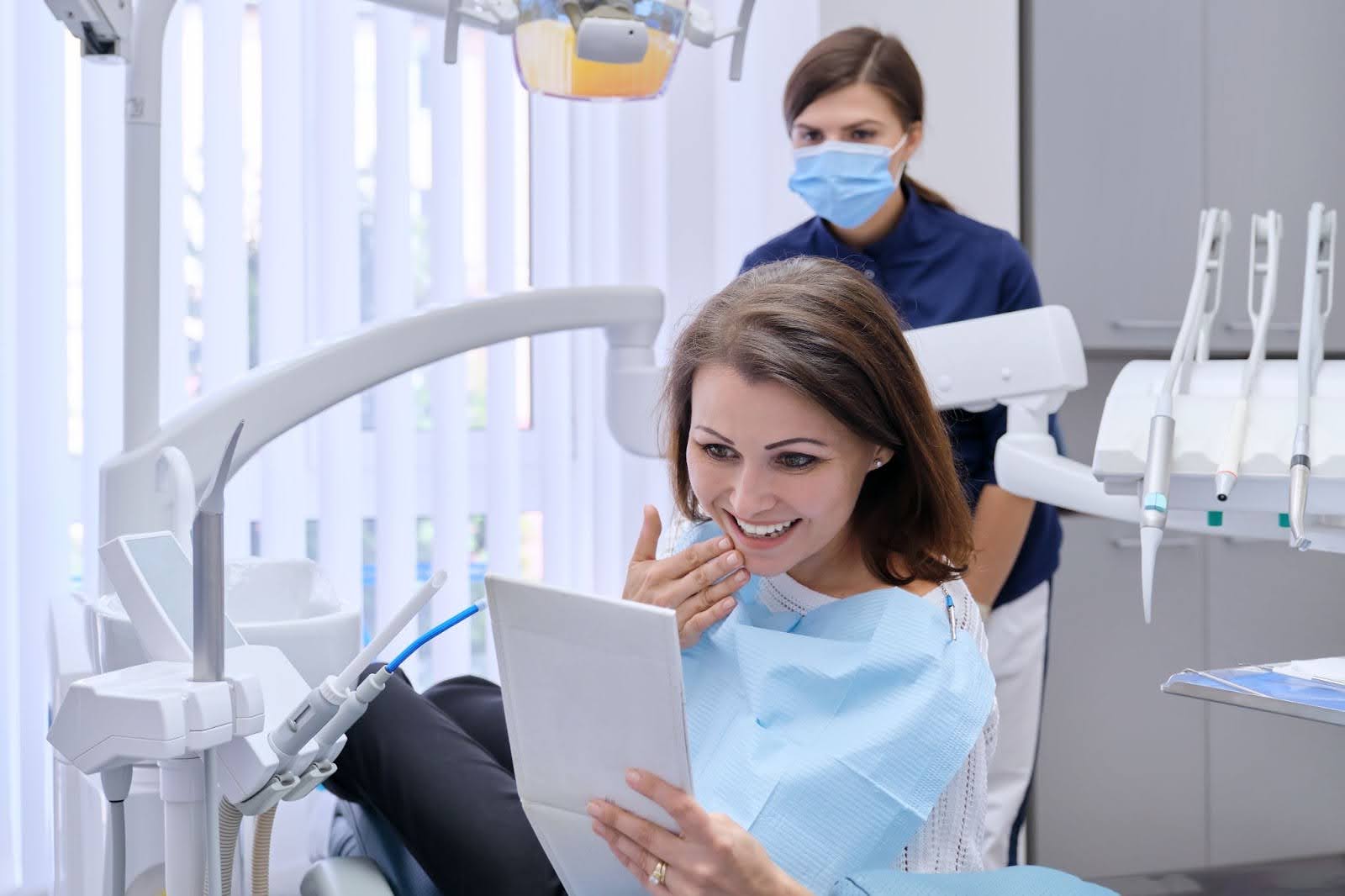
How does dental hygiene work and how often do you really need it? The complete guide
Do you think you brush your teeth thoroughly and regularly, so you don’t need professional dental cleaning? Think again. Even the best toothbrush and the most consistent routine can’t clean every part of your mouth as thoroughly as a professional can. But how often should you actually go for professional dental cleaning? Find out in this article.
What is dental hygiene, and why is it so important?
Dental hygiene (sometimes also referred to as oral hygiene) involves professional care of the teeth and oral cavity provided by a dental hygienist. It differs from home care in that it includes procedures that cannot be performed with a regular toothbrush or dental floss.
Typical components include:
- removal of plaque and tartar, especially from areas where plaque accumulates below the gumline, where a toothbrush cannot reach;
- removal of pigmentation (e.g., caused by smoking, drinking coffee, or tea);
- enamel polishing and fluoridation to strengthen tooth enamel;
- instruction and practice in cleaning techniques, assistance with choosing dental care products—such as interdental brushes
Regular dental checkups can detect early-stage cavities, gum inflammation, or orthodontic issues before they cause pain—but these conditions can quickly worsen.
How often should you visit the dental hygienist?
As a general rule, you should visit the dentist every 6 months —unless you are at higher risk of developing dental problems. Regular visits help keep your gums healthy, prevent the buildup of tartar and stains, and avoid unnecessary procedures in the future.
At-risk groups: When is it better to go more often?
For some patients, visiting the dental hygienist just twice a year isn’t enough. If you’re in a high-risk group, your hygienist may recommend that you visit every 3–4 months. Who should take note?
- Patients with braces – whether fixed or invisible – face greater challenges with oral hygiene, as plaque often accumulates in hard-to-reach areas around the braces.
- Smokers and tobacco users are more likely to experience pigmentation, inflammation, and an increased buildup of tartar.
- People with periodontal disease or a tendency toward bleeding gums —more frequent care helps slow the progression of the disease.
- Pregnant women – hormonal changes during pregnancy increase gum sensitivity and the risk of inflammation.
- Children – depending on the stage of dental development and their habits; the sooner children learn proper oral hygiene, the better.
“When a patient wears braces—especially fixed braces—they become a sort of ‘haven’ for bacteria. Regular professional care every 3–4 months allows us to prevent stains and cavities between the wires early on, ensuring a beautiful, straight, and healthy smile once treatment is complete.”
What happens if you don't go to the dental hygienist?
Dental hygiene isn't just a cosmetic issue. If you neglect it, problems won't be long in coming. What are the risks?
- Plaque and tartar build up, even in places that a regular toothbrush can’t reach. This increases the risk of gum inflammation (gingivitis) and, in more severe cases, periodontitis.
- Stains from coffee, tea, wine, or smoking become more noticeable and harder to remove without professional cleaning. The only solution is to have your teeth whitened by a dentist.
- Bad breath can be a sign of plaque that hasn't been removed or of an emerging infection.
- Increased risk of tooth decay – plaque that is not removed can erode the enamel and cause irreversible damage.
- Patients with braces are also at risk of decalcification (white spots) around brackets or attachments —all due to plaque buildup that cannot be removed through regular brushing. Read more here: Damaged Teeth After Braces: Prevention and Solutions
Want to prevent this? Schedule a dental hygiene appointment before problems arise.
What is the step-by-step process for dental hygiene?
If this is your first visit to a dental hygienist, you may not know exactly what to expect. However, the procedure is simple, systematic, and, most importantly, painless.
- Initial Consultation and Examination
At the beginning, the dental hygienist will check the condition of your teeth, gums, and overall oral hygiene. She will ask how you brush your teeth, what tools you use, and whether you have any problems.
Scaling and PolishingFirst, an ultrasonic device is used to loosen the tartar. Then, the dental hygienist finishes cleaning your teeth with hand instruments— even in places you can never reach with a toothbrush at home. She works both above and below the gum line.- Air-Flow Sandblasting and Polishing
The next step is to remove stains caused by coffee, tea, wine, or smoking. Gentle sandblasting with a mixture of water and powder leaves your teeth beautifully smooth and clean. This is followed by careful polishing of the enamel.
FluoridationTo finish, we apply a fluoride gel or varnish, which strengthens tooth enamel and protects it from cavities.
Guidance and RecommendationsEvery visit concludes with a personalized consultation. The dental hygienist will demonstrate the proper brushing technique and recommend customized tools—such as interdental brushes, dental floss, or special brush heads. If you wear braces, you’ll learn how to care for attachments, wires, or aligners.
Recommended Reading: A Comprehensive Guide to Life with Braces
How long does a dental cleaning take?
A standard dental hygiene appointment for an adult patient lasts approximately 45 to 60 minutes. During that time, we’ll remove tartar, clean stains, polish your teeth, apply fluoride, and provide you with tips on how to further improve your oral care.
Your first visit may take a little longer—the dental hygienist will discuss your oral hygiene habits with you, assess the condition of your gums, and create a personalized care plan.
For children, treatment may be shorter, especially if they visit the dentist regularly and there is no significant plaque buildup. Conversely, for patients with braces (such as Invisalign or fixed braces), treatment may take longer —due to the more difficult cleaning around attachments, wires, or other components of the braces.
Does dental hygiene hurt?
Fear of pain is one of the most common reasons people put off visiting the dental hygienist. But is this fear justified?
If you have healthy gums and visit the dentist regularly for cleanings, the procedure is usually completely painless —or only slightly uncomfortable. Sensitivity is often linked to poor oral hygiene, inflammation, or tartar that has not been removed for a long time.
In short, no— dental hygiene doesn't hurt. But if a problem has already developed, the treatment may be more sensitive.
When can dental hygiene be unpleasant?
An unpleasant sensation may occur especially when:
- The gums are inflamed —they tend to be sensitive, swollen, and bleed easily.
- The tartar hasn't been removed for a long time and is very hard.
- The tooth necks are exposed, which increases sensitivity to touch and temperature.
- You have a low pain threshold or generally more sensitive teeth.
How can I minimize the pain?
The good news is that even patients with sensitive teeth can undergo dental hygiene treatment comfortably. Here’s what helps:
- Regular oral hygiene at home – the better you take care of your teeth at home, the easier (and more pleasant) the treatment will be.
- Modern technology – dental hygienists today use ultrasound, fine hand instruments, and Air-Flow, a gentle sandblasting method.
- Local anesthesia – if you know you have sensitive teeth, don’t hesitate to ask for anesthesia.
- Open communication – let the hygienist know about your sensitivity. They will then tailor their approach to your needs.
- Care for patients with braces – the better you clean around the wires or attachments, the less the dental hygienist will have to clean hard-to-reach areas.
And here’s our extra tip: The more often you come in, the less it hurts. Regular visits mean less buildup and shorter, gentler treatments.

Dental Hygiene: Cost—How Much Does a Professional Cleaning Cost?
Dental hygiene is not a one-size-fits-all service—and the price reflects that. In the Czech Republic, it ranges from 900 to 2,100 CZK, depending on several factors:
- location and type of practice (larger cities = higher price),
- duration of treatment (often 45–90 minutes),
- the use of methods such as Air-Flow or ultrasound,
- the extent of the procedure and the condition of the teeth,
- whether it includes home care instructions and recommendations for assistive devices.
💡 Tip from the World of Braces: If you wear braces, keep in mind that your appointments may take a little longer—and sometimes cost a little more—because it’s harder to clean around the braces. But regular visits will save you not only money but also your teeth.
Which insurance company covers dental hygiene?
In the Czech Republic, no health insurance company fully covers dental hygiene as a routine procedure—it is generally considered a supplementary or preventive service for which a subsidy may be available.
Health Insurance Contributions in the Czech Republic in 2025
Below is an overview of some insurance companies and their coverage (as of 2025; it is advisable to check the terms and conditions with the insurance company):
How to Apply for a Grant
- You will usually need proof of payment for the dental hygiene service, which you can obtain at the dental hygiene office.
- The insurance company will require that a preventive checkup with a general practitioner or dentist have been completed within a specified time frame (e.g., within the last 12–24 months).
- Applications are usually submitted online via the insurance company’s website or app (e.g., VZP – Moje VZP).
- The receipt must not be older than a certain number of months, as specified by the insurance company.
Always check your insurance company’s website —premiums and terms may change.
The Benefits of Regular Dental Hygiene You May Not Know About
Regular dental hygiene offers much more than just fresh breath and smooth teeth after cleaning. It also has a whole range of less obvious—but all the more important—benefits.
- If you keep your gums healthy and remove plaque and stains early on, you can prevent more serious problems —such as tooth loss or advanced periodontitis.
- Another benefit is the aesthetic result. Thanks to the professional removal of stains caused by coffee, tea, or smoking, your teeth will look whiter even without chemical whitening.
- And because cavities and gum disease can be effectively prevented, fewer dental procedures are needed —which means less stress, less time in the dentist’s chair, and, in the long run, lower treatment costs.
- Research shows that regular professional dental care can significantly reduce the risk of serious illnesses—such as heart disease, dementia, or pneumonia —in older adults (Yoo et al., 2023; Chang et al., 2019; Park et al., 2018).
Although dental hygiene may seem like a “routine task” at first glance, it is actually one of the most effective ways to maintain a healthy and attractive smile—whether you wear braces or not.
When should I schedule a dental hygiene appointment?
It’s a good idea to make an appointment right away if:
- My gums bleed regularly
- You notice bad breath that persists even with regular oral hygiene
- Do you see dark spots on your teeth?
- You wear braces and see plaque or food debris around them
- It has been more than 6–12 months since your last professional dental cleaning
How do I find a good dental hygienist?
Choose a dental office with a certified dental hygienist that emphasizes patient education, uses modern, gentle equipment (Air-Flow, ultrasound, plaque detection), and where the hygienist respects the sensitivity level agreed upon with the patient.
Don't wait until the problem becomes serious.
You often ask
How long do the results of a dental cleaning last?
Dental hygiene treatments typically keep your teeth feeling clean, your surfaces smooth, and your breath fresh for about 6 months, provided you follow the recommended home care routine. For high-risk patients, orthodontic patients, or those with poor hygiene habits, a follow-up visit may be necessary as early as 3–4 months later.
How often does VZP cover the cost of dental hygiene?
VZP provides subsidies under the “Physical Activity and Dental Hygiene” program. For adults, this is typically 500 CZK per year; for children under 18, the amounts are usually higher (e.g., up to 2,000 CZK in some cases). A prerequisite is that the individual has undergone a preventive checkup with a general practitioner during the given period.
How much does dental hygiene cost?
In the Czech Republic, the cost of professional dental hygiene typically ranges from ~1,200 CZK to ~2,200 CZK for a standard adult visit, and may be higher for an initial hygiene appointment or if the service is more extensive (Air-Flow, sandblasting, stain removal). The price is usually lower for children. Services involving advanced methods or requiring more time may be more expensive.
What should you avoid doing after a dental cleaning?
After treatment, it is a good idea to:
- Avoid consuming very hot, acidic, or pigment-rich foods and beverages (coffee, tea, red wine) for at least 2 hours;
- Don't neglect your oral hygiene —continue brushing and using interdental cleaners;
- Do not undergo teeth whitening or other cosmetic procedures without a professional’s recommendation;
- If you have sensitive teeth or tooth necks, avoid cold foods and toothpastes with a high concentration of abrasive particles;
- Keep your scheduled checkups and dental hygiene appointments —failing to do so can lead to gum disease or tooth decay.
You might be interested in these articles:
- Braces before and after: How do they transform your smile?
- Patient experience
- Braces at any age, for children and adults
- 5 Questions About Invisible Braces You Were Afraid to Ask
- How to relieve tooth pain when wearing braces?
Resources used:
- Chang, Y., Woo, H., Park, J., Lee, J., & Song, T. (2019). Improved oral hygiene care is associated with a reduced risk of atrial fibrillation and heart failure: A nationwide population-based cohort study. European Journal of Preventive Cardiology, 27, 1835–1845. https://doi.org/10.1177/2047487319886018
- Park, S., Kim, S., Kang, S., Yoon, C., Lee, H., Yun, P., Youn, T., & Chae, I. (2018). Improved oral hygiene care reduces the cardiovascular risk associated with oral health conditions: a population-based study from Korea. European Heart Journal, 40, 1138–1145. https://doi.org/10.1093/eurheartj/ehy836
- Yoo, J., Huh, Y., Park, S., Han, K., Park, H., Cho, K., Ahn, J., Jun, S., & Nam, G. (2023). Association Between Dental Diseases and Oral Hygiene Care and the Risk of Dementia: A Retrospective Cohort Study. Journal of the American Medical Directors Association. https://doi.org/10.1016/j.jamda.2023.08.011