3 Main Reasons to Choose Invisible Braces Over Fixed Braces
- Invisible braces involve more gradual adjustments than the monthly tightening of fixed braces, so the treatment is not painful.
- The braces are practically invisible in the mouth, so they have a significantly smaller impact on appearance or professional performance.
- You don’t have to avoid certain foods, because invisible braces are removed from your mouth when you eat.
You can find quite a bit of information online about invisible aligners, but few sources give you a true picture of just how complex the treatment is. Even during the initial consultation, we often encounter the misconception that once the aligners are fitted, all you need to do is change them regularly and the process proceeds more or less on its own . This is only partially true. But we’d be happy to lift the curtain on the world of braces so you can see what’s happening behind the scenes.
Look no further than Invisalign
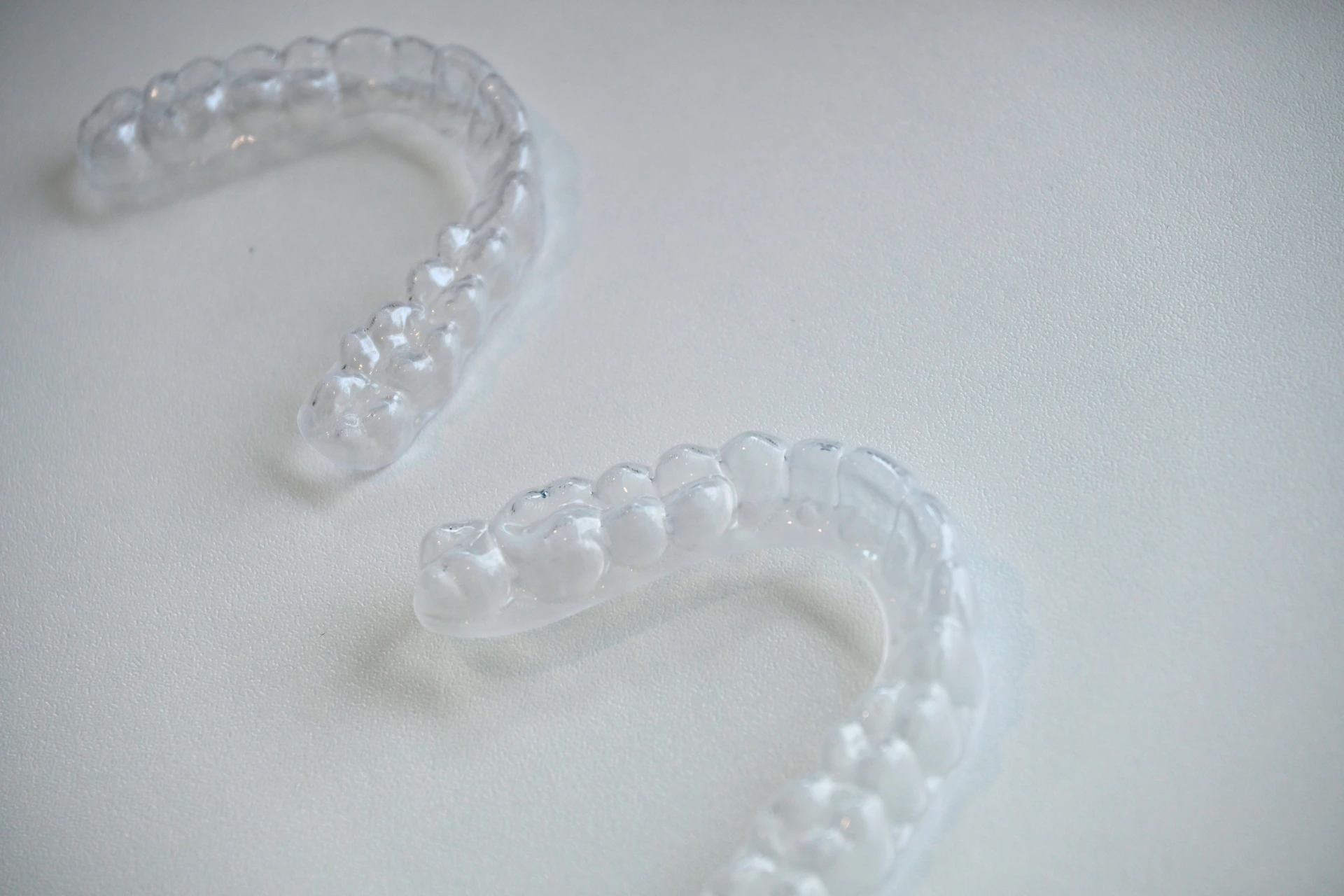
You’ll most often encounter invisible braces in the form of clear, 0.75-millimeter-thick aligners custom-molded to fit your teeth. It took a few months for them to make their way into your mouth after the initial scan, and it’s fair to ask why.
All your data in one place
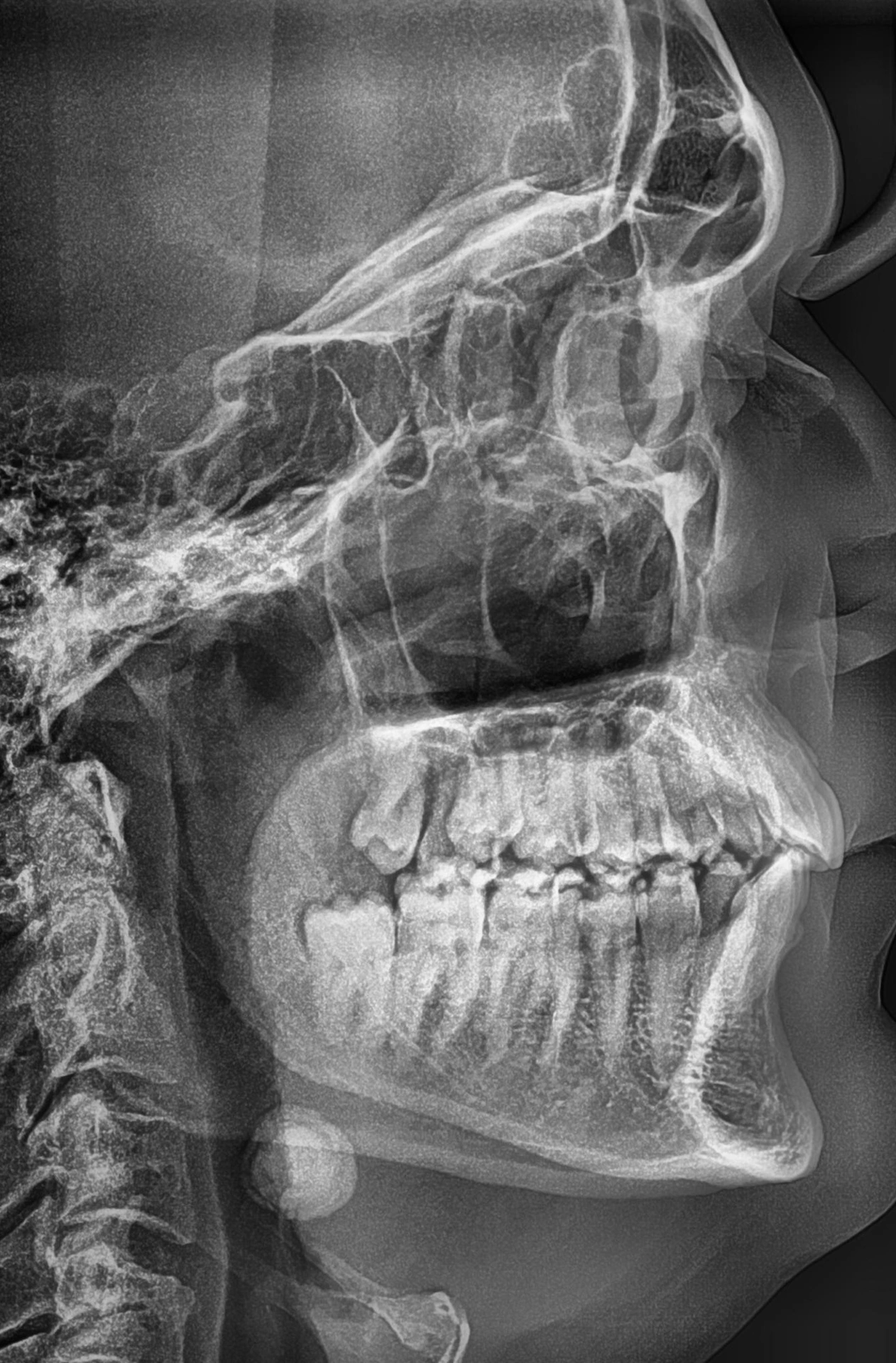
On the 3D scanner, we can see how the teeth are positioned within one jaw as well as how they align with the other jaw. However, braces work over the long term, so we also need to look deeper—which is where a traditional X-ray comes in. It allows us to determine if you have impacted but unerupted teeth, for example, or to estimate how a child’s teeth will develop. We must link all this data, including photos, and merge it into a single 3D model of your teeth.
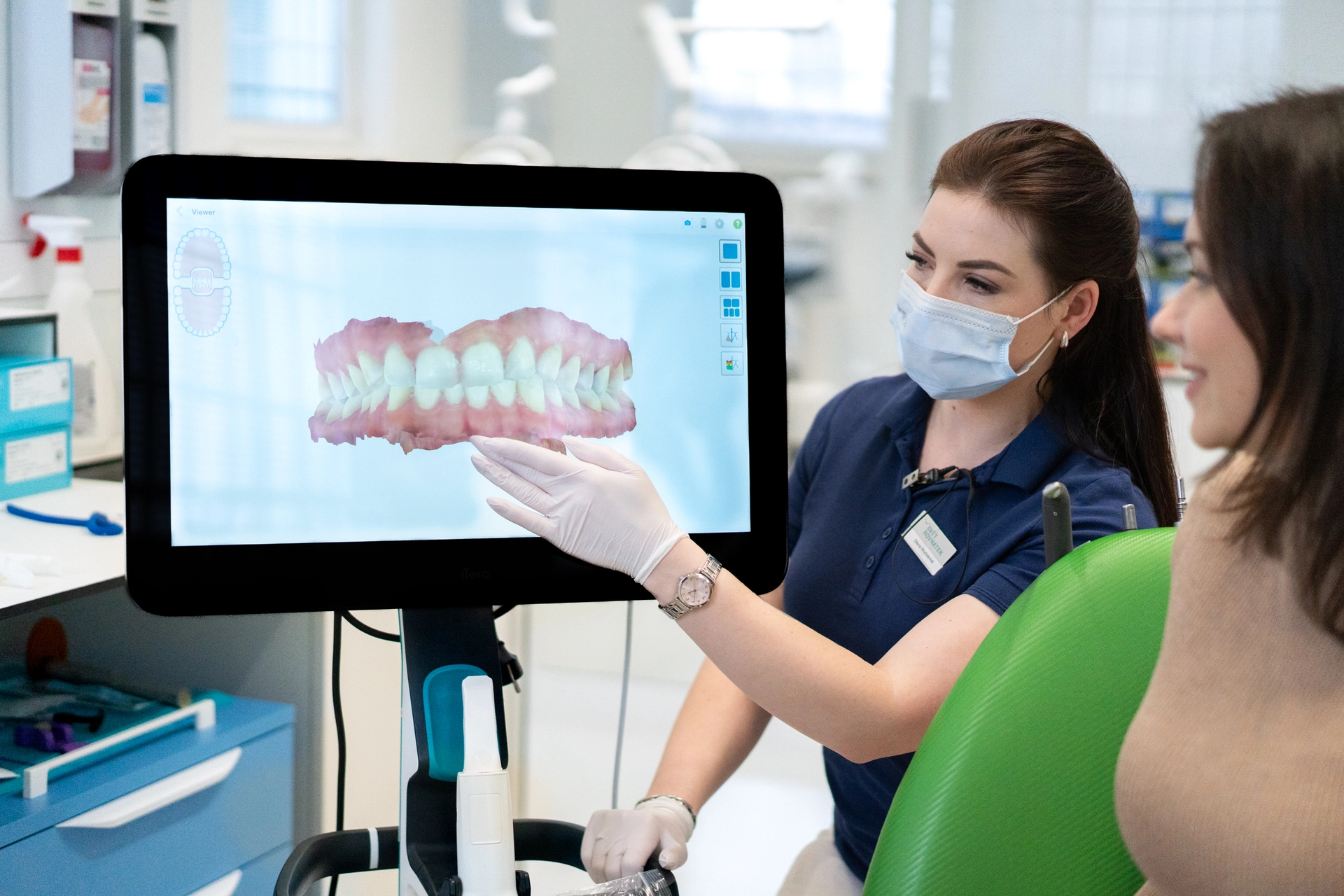
Why do we take so many photos and scans from different angles?
A beautiful smile isn’t just about the alignment of the teeth. Its aesthetics are also influenced by whether the smile is symmetrical with the rest of the face; it also depends on whether the gums are visible when smiling, and whether their position harmonizes with the shape of the face, both in profile and from the front.
Treatment Planning
We know how much tooth movement a single aligner can handle. That’s why we can break down the entire treatment into individual aligners so that all movements and rotations build on one another. By using artificial intelligence, we can speed up certain planning steps or draw on experience gained from similar cases. In the Invisalign ClinCheck program, we can then show clients the entire process and even describe at each milestone why we are performing a particular procedure. However, every treatment plan is reviewed individually by a dentist and a 3D dental technician.
Why are there multiple treatment plans?
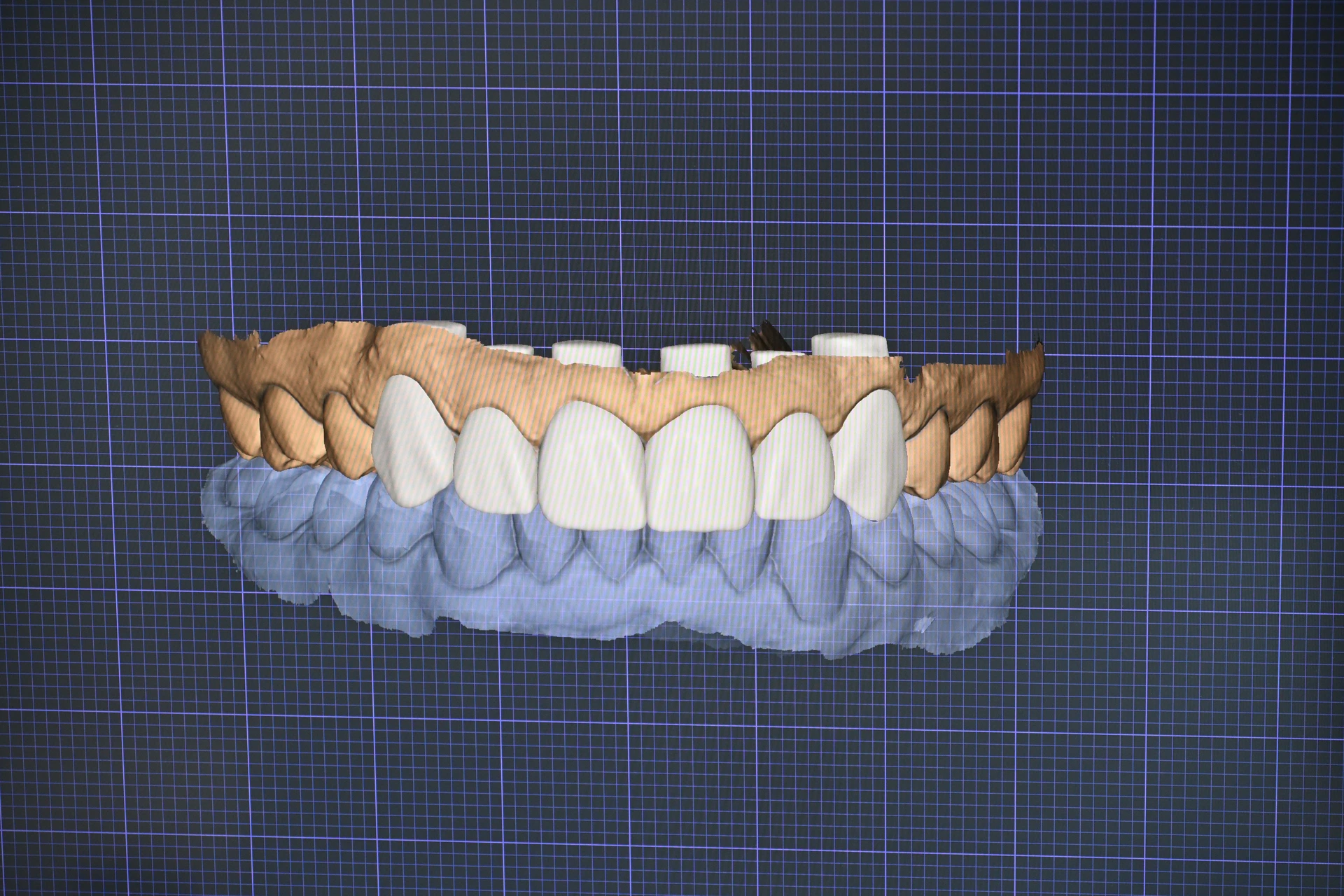
This is particularly the case when we want to give clients a choice based on their preferences. Some patients come in wanting to straighten their teeth, but they also have, for example, chipped enamel. In such cases, we create one treatment plan that uses only braces, while in the second scenario, we also incorporate dental veneers so that the teeth are not only straight but also aesthetically pleasing. The treatment process therefore begins to differ midway through, so that we can prepare the teeth for the application of veneers.
Manufacturing of invisible braces
We send the final treatment plan created in ClinCheck Pro to the Invisalign data center, which then manufactures the aligners in Mexico and China. There, a physical model is created from the digital model, onto which the aligner itself is molded. Unlike traditional 3D printing, which we use to manufacture retention splints and then manually finish, the aligners are laser-cut, so they no longer require polishing.
How are braces labeled?
Yes, each set of braces is marked with a "U" (upper) for the upper jaw and an "L" (lower) for the lower jaw, along with the order in the treatment plan. So you'll start with number one.
How to attach attachments
The braces stay in place thanks to so-called attachments—small protrusions made of composite resin that are bonded to the tooth enamel and cured under ultraviolet light. How does it work? The orthodontist does not bond individual attachments to each tooth, but instead attaches them in advance to a zero-set of braces, which already has recesses prepared for them. This set is positioned correctly and then cured with ultraviolet light. This ensures that the position of the “brackets” will correspond exactly to the treatment plan.
What do the attachments look like?
Ideally, you won’t even notice them, since they’re made of tooth-colored composite. Upon closer inspection, however, you’ll notice that they come in two varieties: conventional ones, which serve as anchor points for the splint, and optimized crescent-shaped ones, which are used to apply pressure to the teeth.
How do you remove attachments?
Simply put, with a dental drill. And it’s completely safe! The largest part of the attachment is shaped using a small drill bit, and then you gradually move on to polishing with a rubber cup. It’s important to use materials that are harder than the attachments themselves but softer than tooth enamel, so as not to damage the teeth.
Can a nurse apply the patches, or is a doctor required?
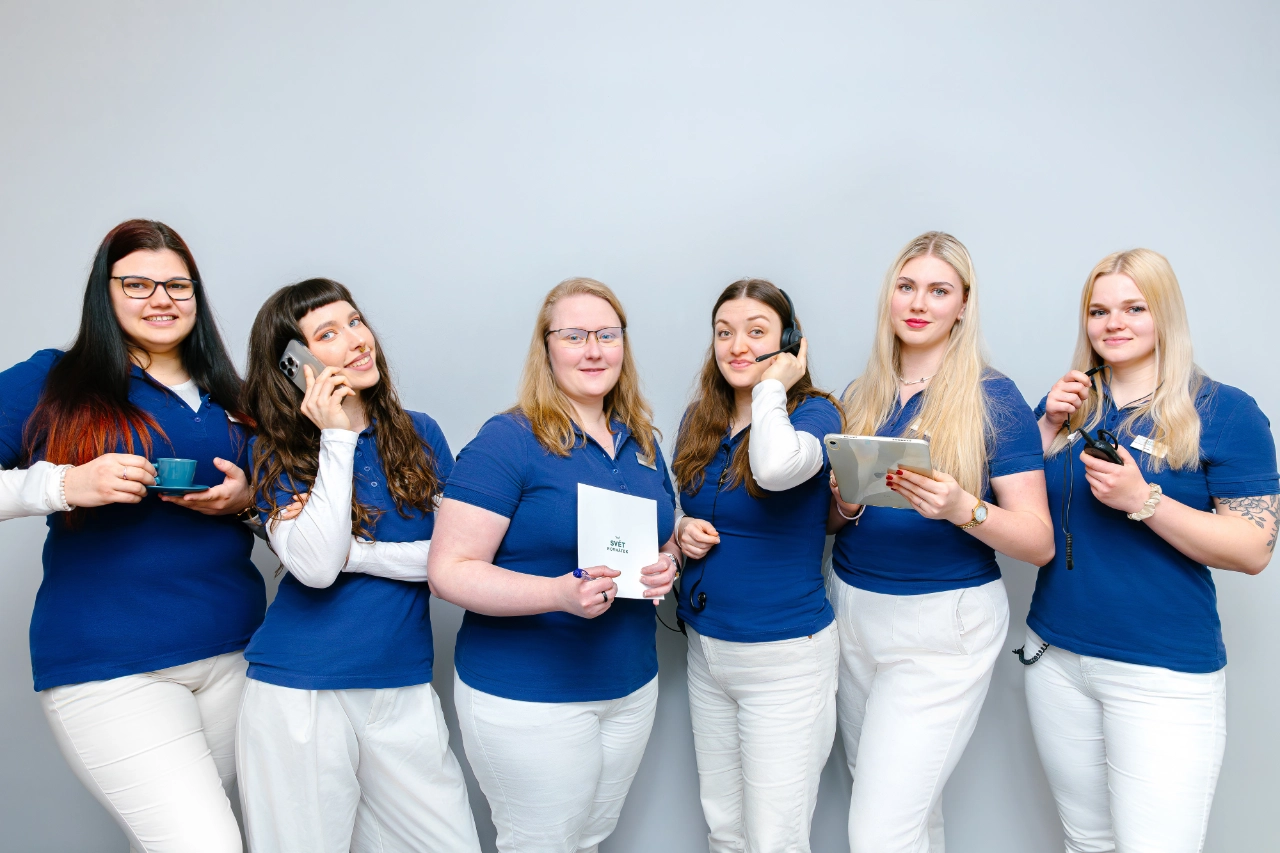
Accreditation and compliance with legal requirements are the bare minimum, which we naturally meet. Therefore, having nurses apply the attachments is also legally sound. However, our quality control system has multiple levels. Each nurse has a buddy—a more experienced colleague who guides her. A second safeguard of expertise is the dentist himself, whom our assistants often consult with even before you arrive at the chair, so you may not even notice these mutual consultations.
What courses must our newly graduated nurses have completed?
Our nurses have either already completed the surgical assistant training program or begin it directly at Svět rovnátek, which is an accredited training facility for this program. Given that innovative technologies evolve relatively quickly, we train all our employees ourselves, including through a buddy system in which a more experienced staff member always mentors our new hires. Our assistants also undergo regular evaluations.
Double-checking minimizes human error
We are not the only clinic that offers treatment with clear aligners. However, thanks to our partnership with Invisalign, we are confident in handling even the most complex cases. We contribute to the development of this solution, benefiting from the seamless flow of data from the initial scan through treatment planning, as well as from our extensive experience. Invisalign allows us to minimize human error; a single patient can be assessed by several doctors and 3D specialists who have handled thousands of cases with their own hands and computers. This makes it much easier to choose the optimal approach while also offering the patient several treatment options.
What is 3D treatment modeling used for?
Imagine that your teeth are crowded together. There are several ways to address this issue:
- Move the teeth as far as possible. While this won’t get them into the ideal position if there isn’t enough space, the improvement will still be noticeable.
- Perform tooth extractions to create space for the teeth to align properly.
- Combine the first method with a light grinding of the teeth, which saves a few more millimeters of space—enough in some cases.
Which option is best? It depends on your preferences, the dentist’s expertise, how much you dread having your teeth extracted, and the final cost… In any case, it will be easier for you to decide if you can see the results of each method and compare how long the treatment would take, how much it would cost, and how many in-person visits would be required.
Virtual Care
A major advantage of invisible aligners is that you don’t have to visit the office as often. For traditional braces, a standard six-week interval on the calendar doesn’t seem like much, but anyone who’s been through it knows how often they had to visit the orthodontist. With invisible aligners, we usually see each other in person every three months, because part of the examination can be replaced by a smartphone combined with the Invisalign Lens attachment.
Place your smartphone—with the My Invisalign app installed—inside it, put it in your mouth, and watch through the mirror as your phone takes photos of your teeth and compares them to your treatment plan.
Will the app work for me?
If you use an iPhone, the My Invisalign app requires iOS 14 or later; for Android, version 8.0 or later is required. Our nurses will guide you through the installation and setup process. Plus, the app uses the same language as your phone, so you don’t have to worry about any language barriers.
What can the My Invisalign app do?
- It will show you the difference between the original, the final result, and the current state, so you don't lose motivation.
- It will notify you when it's time to take a photo of your teeth for a checkup.
- It takes the photo automatically when you position your teeth correctly "in the frame," so you don't have to fumble around for the shutter button on the touchscreen
How does the app know that the treatment is progressing as planned?
The camera checks how well your aligners fit. It detects the gap between the edge of your tooth and the edge of the aligner itself. It then measures these distances and compares them to your treatment plan.
What if the app tells me something is wrong?
If everything checks out, you’ll get the go-ahead for your next set of aligners. If there are minor deviations, you may be advised to keep your current set. If the deviation is significant, our technicians will take over, and customer support will discuss with you what’s happening, why it’s happening, and how to resolve it.
Conclusion
Now it’s entirely up to you to decide. Treatment with clear aligners isn’t cheap, but it allows you to achieve results faster and more comfortably than traditional braces ever could.
Arrange a free consultation
We will scan your teeth, suggest a treatment and price.